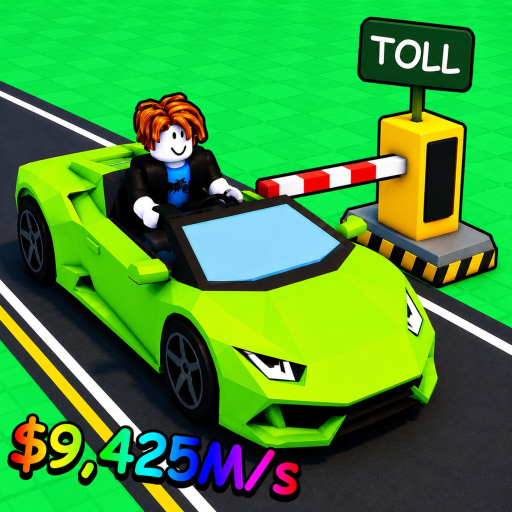
Make Money Faster by Solving the Current Bottleneck
Quick answer: fill an open slot before deleting a working baseline; on a full plot, replace only the weakest observed contributor; rank measured cash-rate upgrades by positive payback; test Roll Areas and Roll Luck separately; save when no purchase has a clean, recoverable benefit.
Public-frame observedMulti-source reportedUnknown
Direct answer
Measure → branch → compare → buy one → recheck
Use payback only for choices with a measured positive cash-rate gain. Use a separate outcome for slot capacity, results per action, or luck-related rolling. The best purchase is the one that addresses today’s bottleneck with evidence you can reread.
Target time = cash remaining ÷ cash per second
Payback = price ÷ positive rate increase
Decision tree
Four questions decide the next action
Read each row in order. The Yes and No paths keep car capacity, deterministic cash rate, roll throughput, and uncertain luck from being mixed together.
1
Is there a visible open car slot?
Yes: Test filling it before replacing a working car. Record total rate before and after the new slot becomes active.
No: Keep every slot fixed except the weakest observed contributor; compare one candidate replacement against that baseline.
2
Is there a deterministic-looking rate upgrade?
Yes: Use its visible price and a preview or controlled after-rate. Toll Level belongs here only when your current UI proves what value changed.
No: Do not manufacture a rate gain. Move to a budgeted roll decision or keep saving.
3
Is result throughput the bottleneck?
Yes: Test Roll Areas by counting results per action before and after one change. Do not assume per-result rarity odds improved.
No: If you are considering Roll Luck, set a fixed budget and treat its percentage as an unknown mapping—not a guaranteed rarity chance.
4
Does any choice show a positive, recoverable gain?
Yes: Rank valid choices by payback, then buy only one and verify the live result.
No: Save cash, gather a cleaner baseline, or wait for a measurable option instead of forcing a purchase.
Walkthrough
Turn a live display into one defensible purchase
Step 1
Record current cash, total cash per second, open slots, and the weakest observed car before shopping.
Step 2
If a slot is open, compare filling it with saving; do not remove a working car just to create a test.
Step 3
If every slot is full, identify one weakest observed contributor and evaluate only its replacement.
Step 4
List each visible price and the new total rate shown in a preview or measured after one controlled change.
Step 5
Calculate target time and positive payback; leave choices with zero or negative gains unranked.
Step 6
Keep Toll Level, Roll Areas, and Roll Luck as separate choices because they answer different bottlenecks.
Step 7
Buy one measurable option, reread the same live value, and replace any preview with the observed result.
Step 8
Save instead when no option has a clear positive benefit, the test cannot isolate one change, or the purchase would consume your roll budget.
Three live-session cases
Apply the tree without preset game data
Each case tells you what to record and how to decide. Enter your own values; no car stat or upgrade price is pre-claimed here.
Case 1: Open slot, one affordable car attempt
Observe: Current total rate, visible roll or acquisition cost, and the total rate after the new car is active.
Decide: Use the empty slot first. Keep the result only if it helps your stated goal; the roll itself does not promise a positive rate gain.
Case 2: Full plot, one weak position
Observe: Current total rate, the exact position you will replace, candidate cost, and the total rate with only that position changed.
Decide: Enter the candidate as an option in the ranker. Restore or reject it when the observed result does not beat the baseline.
Case 3: Toll Level vs Roll Areas vs Roll Luck
Observe: One visible price and one testable outcome for each system: income for Toll Level, results per action for Roll Areas, and a fixed-budget result log for Roll Luck.
Decide: Do not put all three into a cash-payback ranking unless each has a measured cash-rate effect. Choose the experiment that addresses the current bottleneck.
Embedded tool 1
Estimate the target, earnings window, or one upgrade payback
The values shown when the tool loads are editable demonstrations, not My Toll Farm economy data. Replace them with one session’s live numbers.
Live result
Time to Target
Time to target
1m 40s
Cash still needed
1M
Formula: max(target − current, 0) ÷ cash per second.
Embedded tool 2
Compare two to eight measured cash-rate choices
Use this only when every row has a price and a new total cash-per-second value measured on the same basis. Keep Roll Luck out unless it produces a directly measured cash-rate change.
Player-input tool
Build Your Own Upgrade Ranking
Replace the editable example values with two to eight choices from the same live session. The tool ranks only positive cash-rate gains; it does not preload or name game upgrades.
Ranked result
Fastest payback first
Rank 1
Option B
#1
Payback
1m 23s
Rate gain
+6K/s
Rank 2
Option A
#2
Payback
1m 40s
Rate gain
+2.5K/s
Tie order: shortest payback, then highest gain per cost, then the order entered. Recheck the live rate after buying.
No positive gain
Do not divide by zero or force a rank. Save, gather a cleaner measurement, or evaluate the non-cash benefit separately.
Preview differs from reality
Replace the preview with the observed after-rate and rerank. The live result is the relevant input for the next decision.
Progress feels too slow
Use target time to expose the wait. If every available option is unmeasurable or unrecoverable, saving is a valid decision.
RNG is consuming the budget
Set the maximum spend before rolling. A bad sequence does not make the next result due, and Roll Luck is not an exact rarity guarantee.
Plan a cash milestone instead of copying a creator's route
Videos often frame progress as “from $0 to $1,000,000,” “billions,” or “trillions.” Those milestones can be useful planning targets, but a creator's completion time is not a universal route.
Use your current session:
Choose a target such as 1M, 1B, or 1T;
Record current cash;
Record the current displayed cash-per-second rate;
Calculate the constant-rate target time;
Compare that wait with the payback of the next visible upgrade;
The stronger rate reaches the larger target sooner in this demonstration.
Again, the values are hypothetical. Enter current prices and measured rates from your own server.
Why “rich” is not a fixed progression stage
A title such as “filthy rich,” “millionaire,” “billions,” or “trillions” does not identify:
A required upgrade;
A Rebirth threshold;
A Map 2 condition;
A fixed playtime;
A free-to-play route;
A current version;
Whether paid unlocks were used;
Whether progress happened off camera.
Treat the cash amount as a target, not as a verified build order.
When a milestone target is useful
A target is useful when it helps answer a specific decision:
Can I afford the next visible upgrade soon?
Should I save for Rebirth?
Is a weak upgrade worth delaying the target?
Is my current rate practical for a larger goal?
Did the last change improve projected time?
Is the displayed rate stable enough to use?
When not to trust the estimate
Do not rely on one calculation when:
Income is still loading;
A temporary effect is active;
Several cars or upgrades changed together;
The displayed rate does not cover a full toll cycle;
You moved to a different server;
A new update changed the interface or values;
The game did not earn continuously;
Offline earnings are involved.
When saving beats an upgrade
An upgrade can improve your long-term rate and still delay a nearby cash target. Compare the entire route rather than payback alone.
Start with two questions: can you afford it now, and do you know the new total income rate?
If you cannot afford it, include the waiting time before purchase. If the target is reached during that wait, the upgrade cannot make this first target arrive sooner under a constant-rate model.
If the future rate is unknown, do not invent a percentage increase. Use a displayed preview when available, or label an assumed value as a scenario. An irreversible purchase should not be made solely to collect a number for a calculator.
A comparison before spending
Suppose a hypothetical account has 100,000 cash, earns 1,000 per second, and wants 1,000,000. An upgrade costs 250,000.
Waiting reaches the target in 900 seconds. The upgrade takes 150 seconds to afford and leaves zero cash after purchase. To beat ordinary saving, the new total rate would need to exceed about 1,333.33 per second.
That threshold does not tell you what the upgrade actually does. It tells you what evidence is needed before calling it the faster choice for this target.
“Faster to this cash target” is not the same as “best overall.” Collection progress, unlocks, randomness, resets, and convenience may matter, but they require separate evidence. Do not turn an assumed income rate into a permanent recommendation.
What if I already bought the upgrade?
A before-and-after record can describe that past result when other conditions stayed constant. It is useful evidence, not a refund mechanism or a guarantee that the next level has the same return.
Cash milestone FAQ
What should I target first: 1M, 1B, or 1T?
Choose the next amount tied to a visible purchase or decision. A smaller meaningful target is more useful than a large number copied from a video title.
Should I stop upgrading to reach a cash goal?
Not always. Compare time without the purchase, upgrade payback, and time after the measured gain.
Does reaching one million unlock Map 2?
No such rule is supported by the current Map 2 evidence. Read the live gate instead.
Does reaching one billion trigger Rebirth?
Use the current Rebirth panel. Cash milestones on this page are planning targets, not confirmed Rebirth requirements.
Is a creator's route the fastest?
A video can show one successful route. It cannot prove universal optimality without same-version, same-account-condition comparisons.
How often should I recalculate?
After any change to a car, toll, roll system, Rebirth state, Map 2 access, mutation, server, or displayed cash rate.
Money and upgrade FAQ
What is the fastest money method in My Toll Farm?
No universal method is verified. A defensible method is to preserve a baseline, compare one visible cost with one observed benefit, and favor a shorter positive payback when cash-rate recovery is the goal.
What should I buy first?
Buy the cheapest option whose outcome you can clearly measure against your current bottleneck. An open slot, a car replacement, and a toll or roll system need different tests.
Should I fill an empty slot before upgrading?
When the current plot allows it, an open slot is the cleaner first car test because it preserves every working contributor. Still compare its cost and observed result.
What should I do when every car slot is full?
Identify the weakest observed contributor, hold every other slot and system constant, then test one replacement against the same total-rate display.
Is Toll Level always the best money upgrade?
Unknown. Toll Level descriptions conflict and no verified formula establishes a universal return. Measure one level in your current session before ranking it by cash payback.
Should I buy Roll Amount or Roll Luck?
The readable current panel calls the first track Roll Areas and shows it capping at 9. Choose based on the bottleneck: count visible results for Roll Areas, and use a fixed budget for Roll Luck because its rarity mapping remains unknown.
Does Roll Luck percentage equal rare-car odds?
No verified source supplies that mapping. Do not use the displayed percentage as the chance of a specific rarity or car.
What is upgrade payback?
Upgrade price divided by the positive increase in cash per second. It estimates how long the added rate would need to recover the purchase price if the rate stays constant.
What if an upgrade has no positive rate increase?
It is ineligible for cash payback. It may still have another purpose, but that purpose needs a separate measurable criterion.
When should I keep saving?
Save when no option has a clear positive benefit, when several simultaneous changes prevent a clean test, or when a random purchase would exceed the budget you set before rolling.
Should I always buy the largest rate jump?
No. A larger gain can repay more slowly when the price is much higher. Compare positive payback and consider unlock or replacement risk separately.
Are the calculator values official game data?
No. The editable defaults are demonstrations. Replace every value with a reading from the same current session.
Which number suffixes can I enter?
The tools accept plain numbers and K, M, B, T, Qa, and Qi, including commas and decimals.
The math is deterministic; the game inputs are yours
Target time and payback use visible arithmetic. A dated public run shows Roll Areas reaching 9 Max, but no official economy table, fixed upgrade order, car stat sheet, Toll Level formula, or Roll Luck mapping is built into the tools. Current prices and rate gains still come from your session.